
Advancing South India’s Global Agenda

A Japan That Should Be Assertive: Dr. Sridhar Krishnaswami
BackA Japan That Should Be Assertive: Dr. Sridhar Krishnaswami
A JAPAN THAT SHOULD BE ASSERTIVE
Author: Dr. Sridhar Krishnaswami
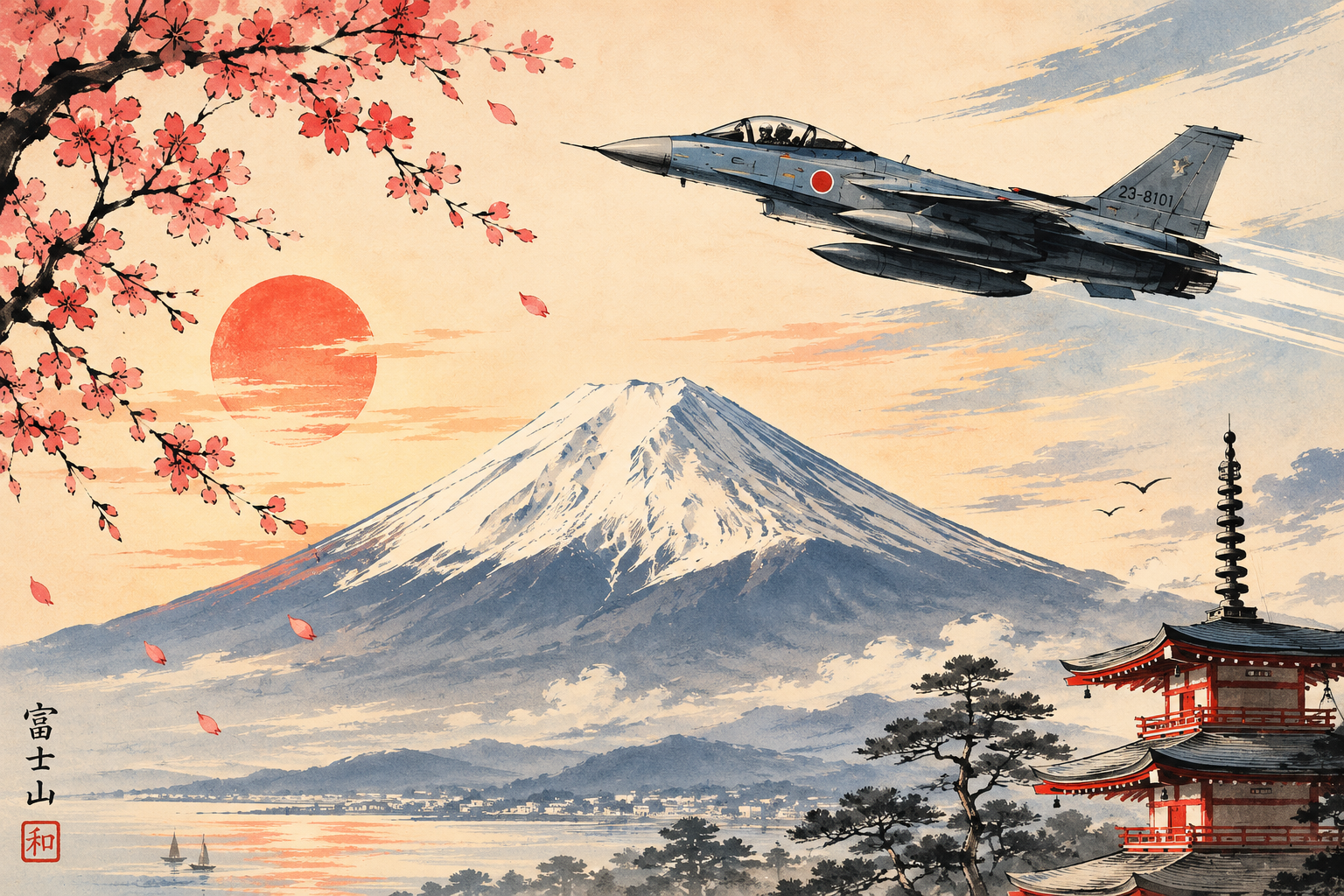
There is a context to foreign policy. Not too long ago China seemed bent out of shape when Japanese Prime Minister Sanae Takaichi told her Parliament that an attack or blockade on Taiwan could amount to a “survival threatening situation” to Japan. The implication of this was quite obvious of Japan put in a situation of getting involved in a conflict not of its making. But China’s reaction was quite severe as always with a senior diplomat based in Osaka calling for “the dirty head that sticks itself in must be cut off”, a remark that Official Beijing did not distance itself from.
What followed were travel and trade restrictions and some huffing and puffing at the United Nations. But Japan’s statement on Taiwan and the response from Beijing had a context: Prime Minister Takaichi made it known that if Japan had to play the big leagues, it would have to show its place in it. And what is a better way than acknowledging the country’s regional environment and a willingness to take steps in spite of treaty obligations with the United States? The new Japanese leader had come to power on a foreign policy platform that included higher outlays for defense, reworking the posturing of the Self Defence Forces and taking steps to amend, if not rid, the Peace Constitution, especially Article 9 that renounced war and prohibiting maintaining an offensive military. And then was the open discussion of nuclear weapons that was getting louder, all along considered as taboo in domestic politics.
China had never been comfortable with the coming of Prime Minister Takaichi for it was clear that the days of Japan being treated as just another silent power in East Asia was getting over. In ways more than one, Prime Minister Takaichi also signaled that the “guilt trips” of the past by way of constantly reminding of the role of Imperial Japan was also coming to an end. It was not as if the new Japanese leader was going to rush to the Yasukini Shrine to further irritate Beijing but a quiet reminder that the two Asian economic powerhouses have more to lose than gain in any sudden outburst of emotions. The two-way trade is about US$ 325 billion; China is Japan’s largest trading partner accounting for over 20 percent of exports and imports; and Japan exports critical computer chips and semi-conductor making equipment.
Japan is under no illusion of its security-strategic environment. It is perhaps in the most hostile neighborhood having to content major nuclear powers like China and Russia with which it has territorial issues and a nuclear irritant like North Korea that tests its missiles in an around the Sea of Japan, all perhaps in a reminder to Washington and Tokyo of what could be the scenario. The Korean peninsula and the Taiwan Straits are just two flashpoints that Tokyo would have to do some ready reckoning; Spratlys is another where some six nations lay claims over a chain of islands, islets and coral reefs where land mass is at times best defined by the flow of low and high tides. Still supposedly to be sitting on huge reserves of oil and gas.
Japan has also to contend with the QUAD, a four-nation grouping that includes India, the United States and Australia which China sees as an Asian NATO. The four-nation grouping was given teeth by Prime Minister Takaichi’s mentor-predecessor Shinzo Abe along with President Donald Trump in his first term. Cleverly navigating a Indo Pacific is not merely in managing the turbulence but in also effectively addressing the challenges. Only recently, Australia appeared to be rudely jolted by the testing of a Submarine Launched Ballistic Missile by China in the South Pacific, just after Australia and Fiji signed a defence protocol. Later in a development that did not go unnoticed, Beijing warned of “consequences” after Taiwan attended the opening ceremony of the Pacific Islands Forum in Palau. Three Pacific nations of Palau, Tuvalu and the Marshall Islands maintain diplomatic ties with Taipei. Australia and New Zealand stressed that the Forum, not outside powers, determine who can engage.
All of this is happening when the Trump administration is showing signs of disinterest or in wanting to re-write the rules of the game leaving many Asian allies wondering about the long-term commitment of Washington. The notion that Asian allies could get “thrown under the bus” by Washington has been floating around for quite sometime and only reinforced after President Trump’s recent summit in Beijing with President Xi and in a subsequent statement that what was hitherto routine arms sales to Taiwan under specific laws and understandings can be used as “bargaining chips” with China, an impression that Beijing can be somehow given a veto over arms sales to Taiwan.
More recently the shock came by way of the Trump administration scaling back the joint military drills with South Korea. Part of the rationale had to do with wanting Seoul taking charge of its own security and strategic issues; the other having to do with not wanting to “insult” Chairman Kim Jong Un who is seen as “behaving well”. But the bottom line was in a continuing perception that Asian allies like South Korea and Japan were getting away “free” under the umbrella of American protection. And the constant talk of allies in Europe and Asia getting away with a “free ride” has been a staple of President Trump; and to be fair to Washington. Japan is not new to hearing about getting a “free ride”, a term that originated in the 1950s but only bandied about since the 1970s and 1980s as trade frictions between the two countries started escalating. And the pitch has reached shrill levels as Washington finds itself highly frustrated that none of its allies are willing to step up to the plate in the ongoing war against Iran.
During the post war reconstruction years, the then Prime Minister Shigeru Yoshida cleverly took the Constitution as a shield to fend off American pressures to rebuilding its military. In fact, for all the pressure on Japan to get on board with the United States in the Vietnam War, Japanese Prime Ministers were arguing that it was the American war in Vietnam that was preventing Japan from exploring and exploiting economic opportunities in South East Asia. In fact, for all the efforts of Prime Minister Yasuhiro Nakasone and his internationalization drive of the 1980s, Japan remained pegged to an “economics first” foreign policy thrust.
Prime Minister Takaichi is at a different time of history and place in the international system where to a large extent the critique of Japan’s “cheque book diplomacy” is a thing of the past. The Indo Pacific and the world at large have moved and are indeed moving at dizzying speeds that yester-year catch phrases and rhetoric make little sense. If Russia’s Ukraine war brought home the dangers to Europe; the war in the Middle East involving the United States, Israel and Iran had much of the world on its knees by the closure of the Strait of Hormuz. The Iran war not only reinforced the supremacy of the Seas in global trade, but also showed that it does not take a super power to call the shots – a small or middle power can very well do it with limited resources. If the closure of the Hormuz throttled 20 percent of global energy supplies, a shut down of other vital choke points in the Indo Pacific pulls the plug on trillions of dollars in trade going much beyond oil and natural gas shipments.
Today’s Japan does not have the luxury of being pegged to an unsure security treaty or sufficiently confident of handling things on its own. Prime Minister Takaichi is faced with challenges in East Asia and the Indo Pacific but seems to have a domestic audience that is receptive to her ideas of how to meet the growing intricacies of world politics. China and North Korea have given Tokyo sufficient incentives to loosen the purse strings in defence spending as also broader ideas on how to bid good-bye to a Constitution that has served the country and its Prime Ministers well over the last eight decades. The next big question is if Japan would head the nuclear path, something its people saw as a taboo even talking about all these years. If Asia would be uncomfortable with Japan donning that mantle, many already believe that the country is just a “screwdriver away” from that status.
A senior journalist who has reported from Washington and the Asia Pacific, Dr. Sridhar Krishnaswami is currently Scholar-in-Residence at Sai University teaching International Relations.
Disclaimer: The views and opinions expressed in the article are those of the author and do not necessarily reflect the official position of the Deccan Centre for International Relations.