
Advancing South India’s Global Agenda

Issue Brief No (09): India-Japan Relations: Strategic Convergence Amid Global Uncertainty Mr. Balasubramanian C. & Ms Mehak Gautam
BackIssue Brief No (09): India-Japan Relations: Strategic Convergence Amid Global Uncertainty Mr. Balasubramanian C. & Ms Mehak Gautam
Issue Brief No: 09
India-Japan
Relations: Strategic Convergence Amid Global Uncertainty
Author: Mr. Balasubramanian C. & Ms Mehak Gautam
Introduction
India-Japan relations have evolved into a “Special Strategic and Global Partnership” of high strategic salience, driven by shared interests in a free and open Indo-Pacific, economic resilience, and technological collaboration. The 16th India-Japan Annual Summit in New Delhi (1–3 July 2026), marking Japanese Prime Minister Sanae Takaichi’s first official visit, reinforced this trajectory through concrete advances in defence co-development, economic security, investment, and people-to-people ties. Both sides frame the partnership around three pillars: defence and security; economic partnership including economic security, energy resilience, technology and innovation; and people-to-people exchanges.
Economic and Trade Relations
The commercial relationship dates to 1972, when Panasonic established its first manufacturing facility in India, followed by Suzuki and Denso in the early 1980s.
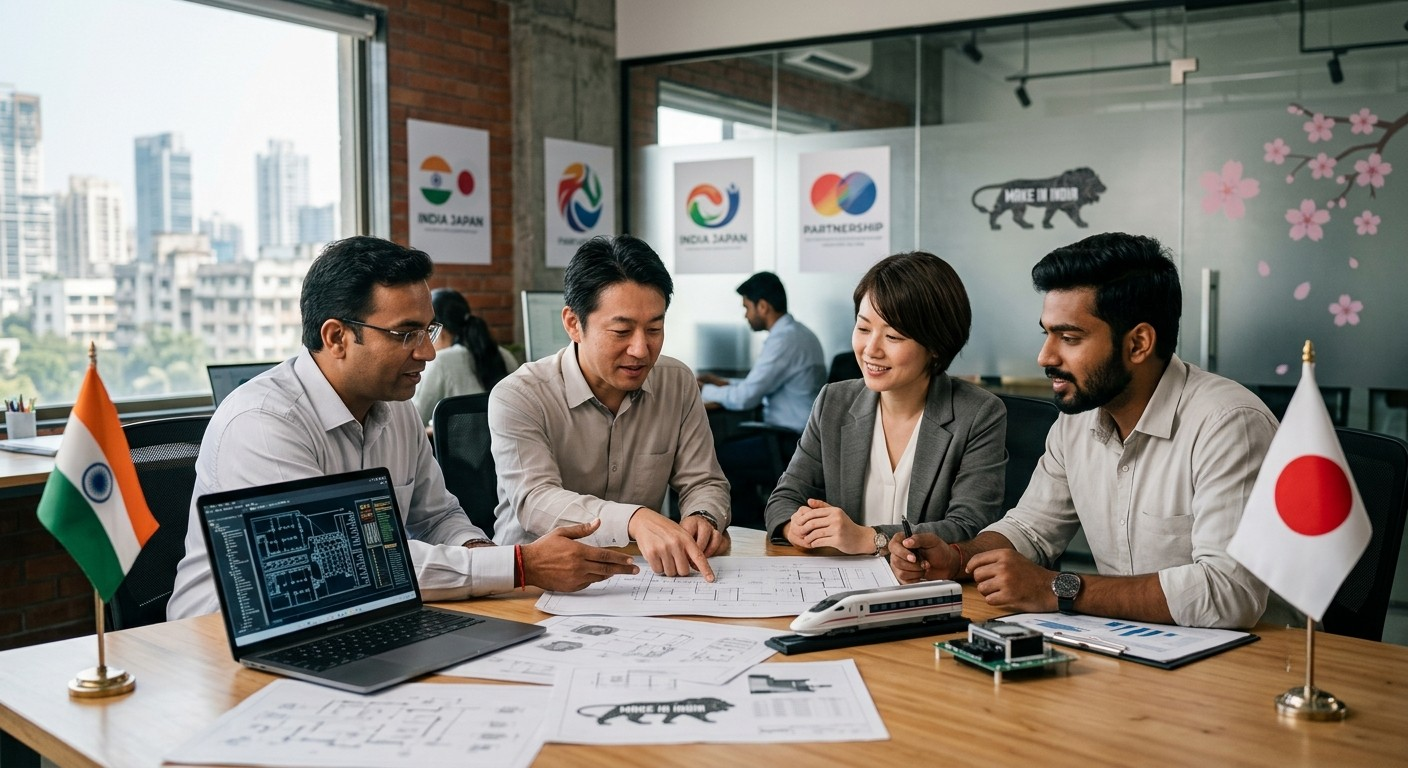
Bilateral merchandise trade reached approximately $27.5 billion in FY 2025–26 with Indian exports amounting to ~$6 billion; imports from Japan amounting to ~$21.4 billion, continuing a multi-year upward trend but with a persistent Japanese surplus. Japan remains a major investor with cumulative FDI between April 2000 to March 2026 at about $48.1 billion (the fifth-largest source for India), with $3.7 billion invested in 2025 alone. Today, around 1,400 Japanese companies operate in India that include Maruti Suzuki, Toyota, Hitachi, Daikin, Yamaha and SoftBank. India remains a priority market for Japanese firms because of its size and long-term growth potential.
While the 2011 Comprehensive Economic Partnership Agreement (CEPA) eliminated tariffs on most goods, yet Indian exporters face non-tariff barriers, and India’s share of Japan’s imports remains under 1%. Leaders have agreed to accelerate a CEPA review to address imbalances, improve market access including for agricultural products such as basmati rice, and better support manufacturing, semiconductors, AI, and supply-chain diversification.
At the 2026 summit the two sides adopted a “Joint Declaration on Economic Security” focusing on five priority sectors viz. semiconductors, critical minerals, ICT, clean energy, and pharmaceuticals plus cooperation on batteries, mobility, biogas, and strategic energy stockpiles (LNG/LPG). Japan set a target of ¥10 trillion (~$63–68 billion) in private investment in India over the next decade; more than 100 cooperation agreements worth roughly ¥2 trillion were signed around the summit. India ranks as the top “most promising” destination for Japanese firms in successive JBIC surveys.
As the trade balance favour Japan, both governments have sought to narrow the gap through initiatives such as “Make in India, Make for the World,” which encourages Japanese firms to manufacture in India for global markets, and the ‘India-Japan Small and Medium Enterprises Forum’, designed to broaden collaboration beyond large corporations. Direct yen-rupee settlement is under discussion to facilitate trade and investment, reducing reliance on third currencies, and to strengthen pharmaceutical supply-chain cooperation.
People-to-People and Cultural Ties
People-to-people and cultural links provide the societal foundation that geopolitics alone cannot supply. Exchanges date back to the sixth century, when Buddhism reached Japan via the Korean Peninsula, a historical connection recalled by Japanese Prime Minister Takaichi ahead of her July 2026 visit.
The ‘Next Gen People-to-People Partnership’, a bilateral initiative between India and Japan established under the India-Japan Joint Vision for the Next Decade targets exchange of more than 500,000 personnel in both directions over five years, including 50,000 skilled Indian professionals and talents for Japan. Focus areas include vocational training, internships, researcher and student exchanges, Japanese-language education in India, and collaboration in IT, AI, and caregiving addressing Japan’s demographic challenges and India’s talent pool. State-prefecture partnerships and the India-Japan Governors’ Network launched in February 2026 promote subnational links. Cultural, educational, and tourism initiatives continue to expand, though realisation of skilled-worker targets remains a work in progress.
To note, contemporary ties remain limited. Only about 54,000 Indians live in Japan, a far smaller diaspora than those in the United States or the Korean community in Japan. To address the shortfall, the two countries have set a target of sending 500,000 personnel to Japan over five years, of whom 50,000 will be skilled professionals and emerging talent. The initiative responds both to Japan’s manpower shortages and to India’s demographic advantage, particularly in IT, manufacturing and other skilled sectors.
Education remains underdeveloped relative to its potential. Programmes such as MEXT, Sakura Science and the Japan Exchange and Teaching (JET) programme aim to deepen links between Indian students and professionals and Japanese universities and companies. The Nihongo Partners programme has expanded Japanese-language education in Indian institutions, though the learner base is still modest compared with Korean-language programmes.
Cultural engagement has advanced most rapidly through media and entertainment. India is the second-largest market for anime after China, with roughly 180 million viewers annually. Japanese pop culture enjoys strong appeal among young Indians, and India’s anime market—valued at more than US$1 billion in 2024—is among the world’s fastest-growing. In 2025 India’s first anime and manga school opened in Hyderabad through a partnership between IACG Multimedia College and Kyoto Seika University.

Science, Technology & Innovation
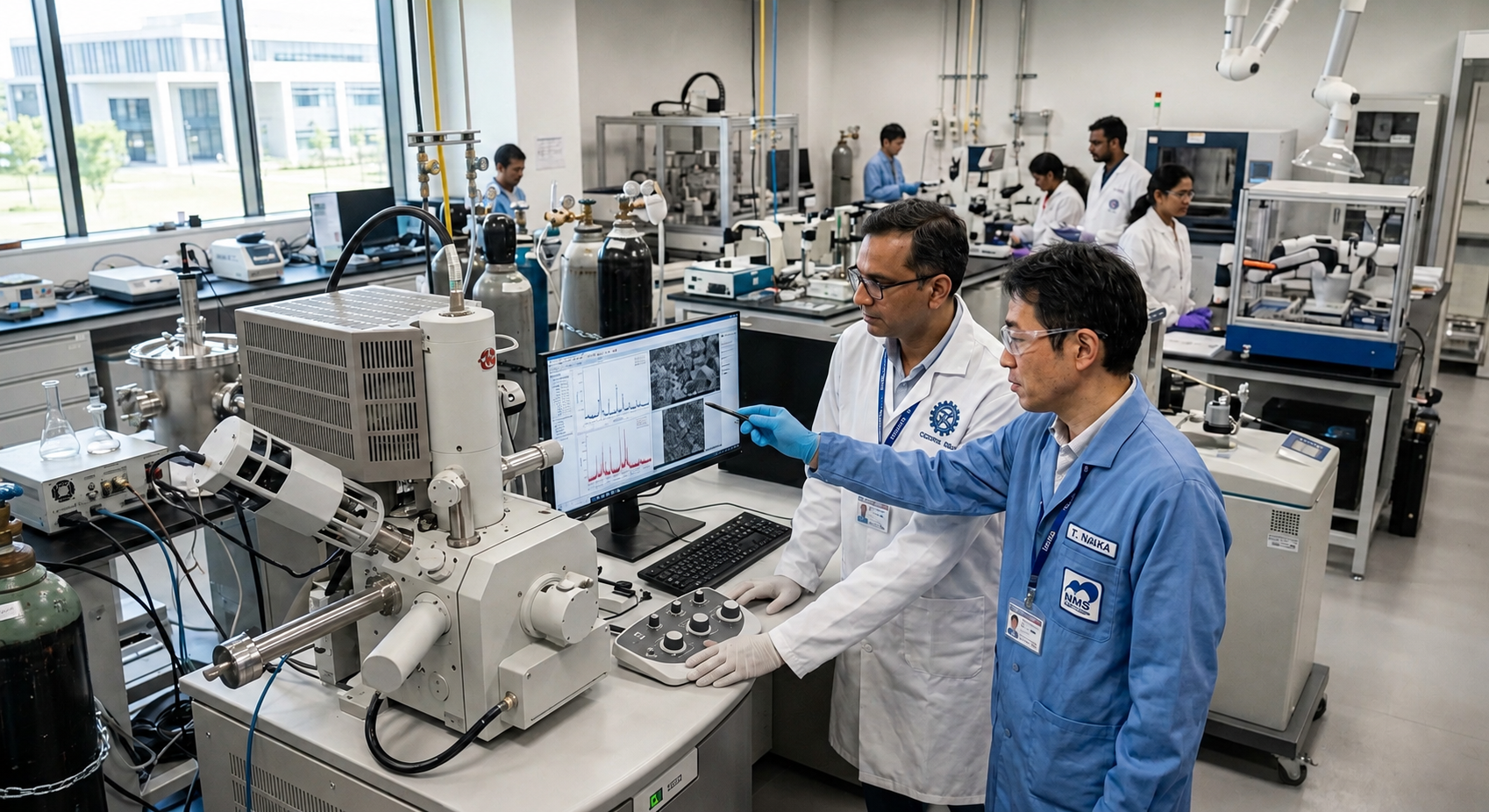
Science & Technology (S&T) cooperation has become one of the strongest and fastest-growing pillars of the India-Japan Special Strategic and Global Partnership. It is now tightly linked to economic security, supply-chain resilience, and the broader Indo-Pacific strategy.
The Japan-India AI Cooperation Initiative (JAI) and the first India-Japan AI Strategic Dialogue in April 2026 form the core of recent advances. At the 16th Annual Summit in July 2026, the two leaders elevated the partnership to a strategic research and development partnership in AI and issued a dedicated Joint Statement on AI cooperation.
While the India-Japan Digital Partnership 2.0, the Memoranda of Cooperation (MoC) that was signed in August 2025 covers areas such as semiconductors, AI, digital public infrastructure, talent, R&D, startups, and network security. In addition, the 2025–26 was designated the “India–Japan Year of Science, Technology and Innovation Exchanges”, marking 40 years of formal S&T cooperation.
Furthermore, the broader economic-security cooperation prioritises five technology-linked areas viz. semiconductors, critical minerals, ICT, clean energy, and pharmaceuticals.
In AI, the cooperation spans the full AI technology stack from infrastructure and models to governance and applications including joint development of multilingual, open-source, and domain-specific large language models (LLMs), including scientific LLMs. Concrete MoUs signed in July 2026 comprise : -
- IIT Bombay with BharatGen Technology Foundation & the Japan’s National Institute of Informatics (NII) for joint LLM research.
- The Indian startup Sarvam with Japan’s Preferred Networks for full-stack AI collaboration.
- India’s AI Mission along with Japan’s Ministry of Economy, Trade and Industry (METI) to support AI companies and startups in both countries.
This apart the focus is also on secure digital infrastructure that consists of data centres, GPUs, compute resources, semiconductors, resilient supply chains, energy-efficient “green” computing, AI safety, cybersecurity, and governance.
To complement this a target of bringing 500 highly skilled Indian AI professionals to Japan by 2030 through joint research, internships, and employment is also in place.
The Science, Technology & Innovation (STI) cooperation is explicitly framed as economic-security cooperation. Both countries seek to build trusted technology stacks and resilient supply chains that reduce over-reliance on any single country particularly China while complementing Quad initiatives on critical technologies and minerals.
Maritime & Multilateral Engagements
Maritime cooperation is a cornerstone, aligning India’s MAHASAGAR vision with Japan’s Free and Open Indo-Pacific (FOIP) concept. The 2026 Maritime Security Memorandum of Arrangement (MoA) institutionalises coordination to protect sea lines of communication which are vital for Japan’s energy imports with over 90% from the Middle East that comes via the Indian Ocean and India’s trade and security interests. Few practical measures include enhanced MDA with satellite capabilities, joint exercises, logistics support, and ship repair cooperation. The navies of India and Japan also participate in other multilateral forums such as Malabar and Milan, and Japan has supported India’s International Fleet Review.
In the broader Indo-Pacific, this partnership strengthens resilience against coercion in the South and East China Seas and supports connectivity and capacity-building with ASEAN and Pacific partners.
Beyond the bilateral relationship, India and Japan cooperate within the QUAD architecture. Within the Quad they work on maritime and transnational security, economic and critical-mineral security, critical and emerging technologies, and humanitarian assistance and disaster relief. Both sides have called for an early Quad Leaders’ Summit to keep the grouping focused and active. Critical-minerals cooperation is being pursued through multilateral financing platforms such as the World Bank’s RISE Partnership and the Asian Development Bank’s Critical Minerals-to-Manufacturing Financing Partnership Facility.
With ASEAN, India and Japan have reaffirmed support for ASEAN centrality and the ASEAN Outlook on the Indo-Pacific. Preparations have begun for a first 1.5-track trilateral policy dialogue with the Philippines, although Manila has indicated a preference for pursuing a bilateral track with India first.
Cooperation is also extending beyond Asia. A new “Strategic Outlook for Expanding Japan-India Cooperation in Africa” draws on India’s Africa Forum Summit and Japan’s Tokyo International Conference on African Development, focusing on industrial hubs, trade and investment.
These initiatives demonstrate that neither country wishes the partnership to remain confined to a single bilateral or regional framework; both are constructing a broader network of partnerships to enhance strategic and economic leverage.
Challenges
Despite political warmth, structural constraints remain. Japan’s capacity to invest abroad is constrained by a stagnant domestic economy and an ageing workforce; India therefore competes not only with Vietnam and Indonesia but also with Japan’s own need to retain capital. Frequent leadership changes in Tokyo with four prime ministers in the five years preceding Takaichi have made policy continuity difficult, particularly in a relationship that has often relied on personal chemistry between leaders.
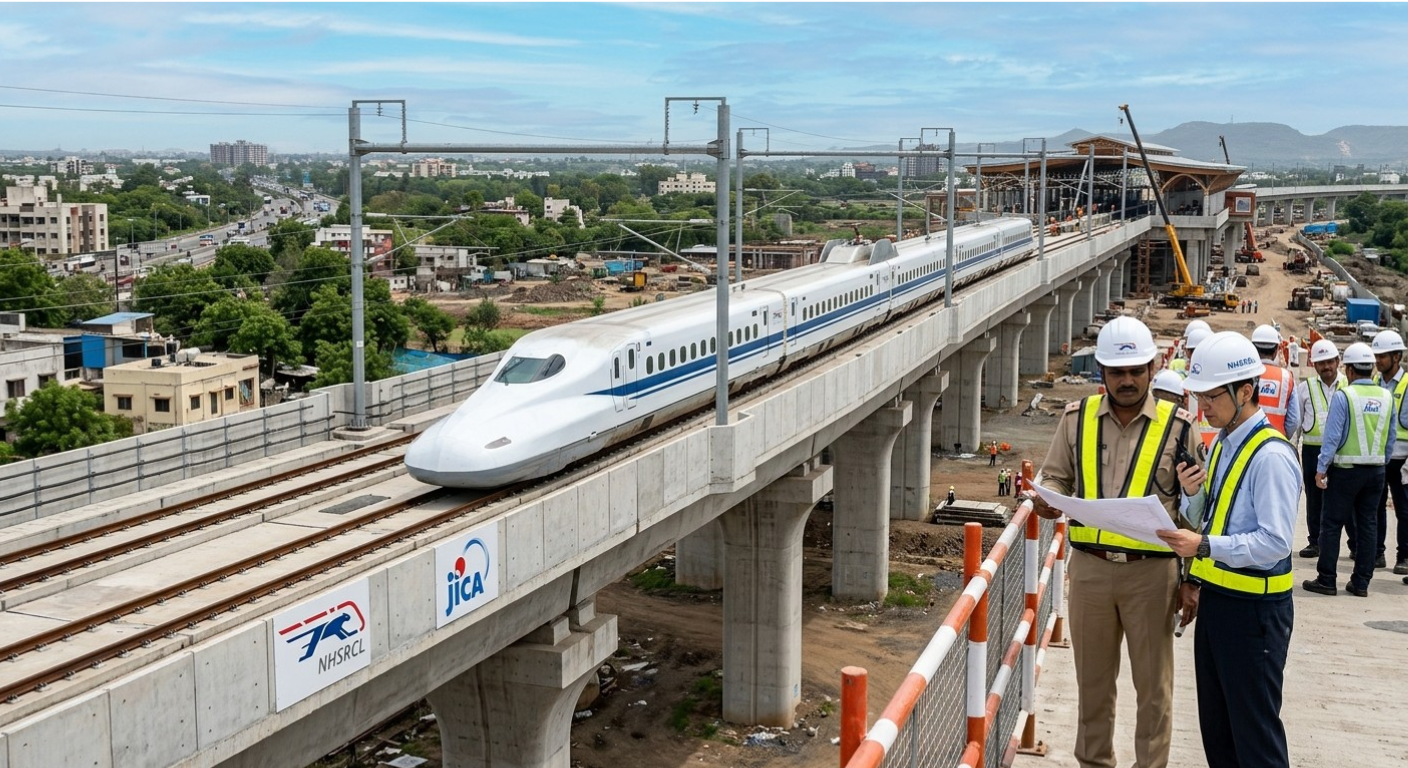
The Mumbai-Ahmedabad high-speed rail project, intended as a flagship of Japanese technology and Indian ambition, has instead become associated with delays, cost overruns and slow execution. Business-culture differences add further friction: Japanese firms typically operate through long, consensus-driven negotiation cycles, while Indian private-sector counterparts move more quickly. This mismatch in pace cannot be resolved by additional memoranda of understanding and continues to slow deal closure on the ground.
A continued Japanese support for projects apart from the Mumbai-Ahmedabad high-speed rail to metro systems, and logistics corridors under the Next Generation Mobility Partnership demands attention.
Issues in non-compatibility of Japanese standards and procedures with Indian ones while taking up projects in Africa have hampered trilateral cooperation abroad for several years. While this severely hampered India and Japan forging a viable partnership in the development sphere abroad, especially in Africa, recent commercial actions and bilateral updates have given hope for purposeful implementation. This trilateral partnership is particularly important since China has shown considerably flexibility in loaning large funds even for projects which are not necessarily viable. However, joint commercial ventures have been more successful in Africa for example the Mozambique LNG Project of $20 billion where Indian state-owned firms (ONGC Videsh, Bharat Petroleum and Oil India) hold 30%, while Japan's Mitsui & Co. holds 20%. This consortium led by France's TotalEnergies has resumed development.
A joint work on strategic petroleum reserves and initiatives such as Japan’s POWERR Asia can complement and supplement Quad energy-security efforts.
With both countries prioritising ASEAN centrality and support a rules-based order, coordination within the Quad hence remains important. Even amid US policy shifts, Japan and India have emphasised practical cooperation and an early Quad Leaders’ Summit. In Northeast Asia, shared concerns over North Korea and Chinese military activity drive closer alignment. India’s multi-alignment with BRICS, Russian energy ties and selective Chinese investment under conditions coexists with deepening Japan partnership, denoting New Delhi’s preference for issue-based coalitions over rigid blocs.
Challenges however remain. These include translating the political will into private-sector scaling. Residual non-tariff barriers need to be overcome urgently. Finally, great-power competition has to be navigated without forcing binary choices for both the countries.
Future Outlook
Seventy-five years of goodwill have not by themselves been sufficient to accelerate the relationship. The next few years will test its substance. The CEPA review agreed during Prime Minister Takaichi’s visit offers the clearest near-term opportunity to inject momentum into trade. On investment, progress on Japanese capital produced joint ventures and manufacturing partnerships that transfer technology, expertise and production practices to India will prove to be mutually beneficial.
The partnership is poised for further operationalisation. A faster defence-industrial collaboration can be expected provided it is enabled by Japan’s relaxation export principles. CEPA modernisation that meaningfully boosts Indian exports is anticipated. Scaled talent mobility can be pursued in the coming days. Concrete supply-chain projects in critical technologies are also on the agenda with mutually accrued benefits for both countries.
Against this backdrop, the India–Japan partnership is not immune to future disruptions, particularly given the uncertainties surrounding their respective relationships with the United States and China. Japan arguably has more at stake, given its treaty alliance with the United States and its continued reliance on Washington for security. Its growing emphasis on strengthening its own defence capabilities reflects a recognition that it may need to prepare for a future in which the United States cannot always be relied upon as a security partner. India, too, faces multifaceted strategic challenges arising from its relationship with China and the wider regional security environment. However, these disruptions have also created an opportunity for India and Japan to deepen their strategic engagement in ways they have not done before. Their shared concerns over China, alongside the uncertainties surrounding US commitments, have opened up new avenues for cooperation and encouraged both countries to reconsider their respective strategic approaches.
Looking ahead, India and Japan will need to explore ways to support each other while building stronger partnerships with other regional players and middle powers. These developments also raise questions about the future efficacy and direction of the Quad, highlighting the need to look beyond existing frameworks and explore broader forms of regional cooperation. Working more closely with partners such as Australia and Indonesia could help both countries strengthen regional stability and better safeguard their interests. Ultimately, the challenge for India and Japan will be to navigate the uncertainties arising from US policy disruptions while building greater strategic resilience, strengthening their own capabilities and developing a wider network of regional partnerships that can serve their interests even as the regional security landscape continues to evolve.
References
- “16th India-Japan Annual Summit Joint Statement.” https://www.pib.gov.in/www.pib.gov.in/Pressreleaseshare.aspx?PRID=2280587.
- “16th India-Japan Annual Summit Joint Statement.” https://www.mea.gov.in/bilateral-documents?dtl/41391/16th_IndiaJapan_Annual_Summit_Joint_Statement.
- “16th India-Japan Annual Summit Joint Statement.” https://www.pib.gov.in/www.pib.gov.in/Pressreleaseshare.aspx?PRID=2280587.
- “Action Plan for India - Japan Human Resource Exchange and Cooperation.” https://www.pib.gov.in/www.pib.gov.in/Pressreleaseshare.aspx?PRID=2161975.
- “DFCCIL Completes Western Dedicated Freight Corridor on March 31 2026.” https://www.newsbytesapp.com/news/india/dfccil-completes-western-dedicated-freight-corridor-on-march-31-2026/tldr.
- “Embassy of India Tokyo, Japan.” https://www.indembassy-tokyo.gov.in/eoityo_pages/NjA,.
- “Embassy of India Tokyo, Japan.” https://www.indembassy-tokyo.gov.in/eoityo_pages/NjA,.
- “Embassy of India Tokyo, Japan.” https://www.indembassy-tokyo.gov.in/eoityo_pages/NjA3.
- “Https://Hakuhodoindia.Com/.” https://hakuhodoindia.com/.
- “India And Japan: A Partnership That’s Ready To Grow | The Reason Why.” https://www.ndtvprofit.com/business/india-and-japan-a-partnership-thats-ready-to-grow-the-reason-why-11764261.
- “India, Japan Adopt ‘Strategic Outlook’ to Build Manufacturing Hub for Africa-Bound Trade.” https://www.aninews.in/news/world/asia/india-japan-adopt-strategic-outlook-to-build-manufacturing-hub-for-africa-bound-trade20260703112228/.
- “India-Japan Joint Declaration on Economic Security Cooperation.” https://www.mea.gov.in/bilateral-documents?dtl/41395/IndiaJapan_Joint_Declaration_on_Economic_Security_Cooperation.
- “India-Japan Ties Anchor Vital Trade, Investment Dimensions: Piyush
Goyal.”
https://www.aninews.in/news/business/india-japan-ties-anchor-vital-trade-investment-dimensions-piyush-goyal20260702143857/.
- “India’s Trade Partnerships Powering Global Integration and Growth.” Accessed https://www.pib.gov.in/www.pib.gov.in/Pressreleaseshare.aspx?PRID=2233417.
- JAPAN, EXPERIENCE. “Beyond the Screen: Decoding the Billion-Dollar Japanese Anime Boom in India (2025),” December 21, 2025. https://www.e-j.org.in/post/journey-of-japanese-anime-in-india-2025.
- “Japan-Australia-India-U.S. (Quad) Meetings.” https://www.mofa.go.jp/fp/nsp/page1e_000396.html.
- “Japan’s India Bet: Beyond China.” https://thesecretariat.in/article/japan-looks-to-india-on-menu-is-china-facing-tech.
- “Joint Press Release on Cooperation with ASEAN by the Quad Foreign Ministers.”https://www.mea.gov.in/press-releases?dtl/41494/Joint_Press_Release_on_Cooperation_with_ASEAN_by_the_Quad_Foreign_Ministers.
- “LOTUS Programme & Sakura Science: The Ultimate Guide to Unlock Your Research Career in Japan.” https://yoisho.in/lotus-programme-sakura-science-the-ultimate-guide-to-unlock-your-research-career-in-japan.
- Nishizawa, Toshiro. “Business, Not Politics, Drives Japan–India Investment Ties,” May 22, 2026. https://eastasiaforum.org/2026/05/22/business-not-politics-drives-japan-india-investment-ties/.
- “NITI Aayog.” https://www.niti.gov.in/node/2394.
- “People, Pilgrims, and Culture: What Sustains the India-Japan Bond.” https://diplomatist.com/people-pilgrims-and-culture-what-sustains-the-india-japan-bond/.
- “PM Takaichi’s India Visit: Bringing India and Japan Closer.” https://www.globalasia.org/forum/pm-takaichis-india-visit-bringing-india-and-japan-closer_rupakjyoti-borah.
- “Prime Minister TAKAICHI’s Visit to India.” https://www.mofa.go.jp/s_sa/sw/in/pageite_000001_01705.html.
- Sharma, Sourabh. “India, Japan Plan Yen-Rupee Trade Settlement to Reduce,” June 30, 2026. https://www.niftytrader.in/markets/india-japan-plan-yen-rupee-trade/.
- “Western Freight Corridor Completion Pushed to 2026,” January 23, 2026. https://www.maritimegateway.com/western-freight-corridor-delay-2026/.
- www.ETBrandEquity.com. “Anime Is Becoming a Cultural and Consumer Force in India: Report.” https://brandequity.economictimes.indiatimes.com/news/research/anime-is-becoming-a-cultural-and-consumer-force-in-india-report/132388513.
- Nippon.com. “Takaichi’s Delhi Visit Highlights Deepening Japan-India Economic Ties.” Nippon.com, October 5, 2026. https://www.nippon.com/en/in-depth/d01260/.
- Observer Research Foundation. “India-Japan Defence Cooperation Breaks New Ground.” ORF, September 15, 2026. https://www.orfonline.org/research/india-japan-defence-cooperation-breaks-new-ground.
- Ministry of Foreign Affairs of Japan. “16th Japan-India Annual Summit Joint Statement: Advancing a Partnership of Strategic Convergence and Trust for Shared Growth, Prosperity and Resilience.” July 3, 2026. https://www.mofa.go.jp/files/101054198.pdf.
- Hindustan Times. “Indispensable Partners, Unfinished Business.” Hindustan Times, October 16, 2026. https://www.hindustantimes.com/opinion/indispensable-partners-unfinished-business-101792090350741.html.
- RNA Media. “Modi, Takaichi Sign First India-Japan Defence Co-Development Pact as Tokyo Pledges $12.5 Billion Push on Summit Day.” RNA, July 2, 2026. https://www.rnamedia.in/trending/modi-takaichi-sign-first-india-japan-defence-co-development-pact-as-tokyo-pledges-12-5-billion-push-on-summit-day/17598.
- Prime Minister’s Office of India. “India-Japan Joint Statement on Cooperation in the Field of Artificial Intelligence (AI).” July 2, 2026. https://www.pmindia.gov.in/en/news_updates/india-japan-joint-statement-on-cooperation-in-the-field-of-artificial-intelligence-ai/.
- Ministry of External Affairs, Government of India. “Joint Declaration on Security Cooperation between India and Japan.” August 29, 2025. https://www.mea.gov.in/bilateral-documents.htm?dtl/40065.
- Ministry of Defence of Japan and Ministry of Defence of India. “Japan-India Joint Press Statement.” August 20, 2026. https://www.mod.go.jp/en/images/20260820_ind-j_en.pdf.
- Economic Diplomacy. “India–Japan FTA Tracker 2026: CEPA Review Gains Momentum as Trade Hits $27.5 Billion.” Economic Diplomacy, September 21, 2026. https://www.economicdiplomacy.in/post/india-japan-fta-cepa-review-tracker-2026.
- Observer Research Foundation. “Expanding Energy Equation for India and Japan.” ORF, September 1, 2026. https://www.orfonline.org/research/expanding-energy-equation-for-india-and-japan.
Mr. Balasubramanian C. is a foreign policy and security analyst based in Bengaluru.
Ms Mehak Gautam is a Research Officer at the Deccan Centre for International Relations. Her research focuses on geopolitics, with particular emphasis on East Asia & China.
Disclaimer: The views and opinions expressed in the article are those of the author and do not necessarily reflect the official position of the Deccan Centre for International Relations.